Blog
So, What Actually Is a Home Organising System?
So, What Actually Is a Home Organising System?
If you’ve ever worked with a professional organiser, read an organising book or spent any time looking at home organisation online, you’ve probably heard the word “system” quite a lot.
Home systems. Organising systems. Storage systems.
But what actually is a system?
I remember thinking exactly the same thing when I first started working as a professional organiser.
What does a “system” actually look like in a real home?
And the answer is: it’s probably much simpler than you think.
A system can be incredibly simple - it can be something as straightforward as an insert in your cutlery drawer that separates your knives, forks, tablespoons and teaspoons.
That’s a system.
It could be a set of labelled storage boxes in your garage, so you know exactly where to find your screws, nails and DIY supplies.
That’s a system too.
It could be a large toy box where all the toys go at the end of the day. Or a little box where your hair clips live. Or a shelving unit where your craft supplies are grouped together.
There’s no one-size-fits-all version of a system. They can be as simple or as complicated as you need them to be, depending on you, your home and the way you actually live.
A good organising system should work for the people using it.
How do you know when you need a new system?
One of the signs that you might need to rethink a system is when you constantly feel like you’re struggling to get on top of things. Perhaps things don't seem to have a proper home, or you’re constantly moving the same things from one place to another, or you can never quite find what you need.
Maybe the way your home is organised is simply causing you more stress than it should.
This can be particularly noticeable in busy households where lots of people are coming and going, or in homes where different people have very different ways of using the space.
It can also be something worth considering if you have ADHD or another reason why conventional organising systems don't naturally work for you.
I'm not an ADHD specialist, but one thing I do know from organising homes is that the system needs to work for the person using it. There is no point creating a beautifully organised system that is so complicated that nobody can maintain it. Sometimes the clearest sign is how you feel when you walk through your front door.
Do your shoulders immediately tense?
Do you look around and think, “Oh, I've got to spend an hour tidying this up”?
Or perhaps you look at something and think, “I don't even know where this is supposed to go.”
That's a good point to stop and ask yourself:
Could I make this easier?
The most important part: everything needs a home. For me, one of the biggest principles of home organisation is simply this: Things need somewhere to live.
That might be a huge box to quickly dump things in at the end of a busy day, it might be a tiny container for tiny items so they don't get lost. It might be a beautifully organised shelving unit or a labelled plastic takeaway tub.
It really doesn't matter what it looks like.
What matters is whether it works.
Because there's a big difference between a home that is messy and a home that is difficult to organise.
Everyone has messy homes - life happens. People come in and dump bags down. Children leave things out. You start cooking dinner and don't finish putting everything away. You have a busy week and the washing basket becomes Mount Everest.
That's normal! But imagine being able to walk into a messy room and think:
“It's fine. I can sort this out in five minutes.”
Because everything has somewhere to go.
You don't have to make decisions about every single object. You don't have to wonder where something belongs. You simply put everything back in its home. You don't have to strive for a permanently pristine house, but a house that is easy to reset can be life changing.
Systems can save you time — and money
Having a home for things isn't just about making tidying easier, it also means you can actually find things.
We've all been there, you know you've got that particular item somewhere.
You know you bought it.
You might even remember buying three of them.
But where are they?
So you search cupboards. You look in drawers. You rummage through boxes.
Ten minutes later, you still can't find them.
Eventually, you give up and buy another one.
And then, six months later, you find all three.
That's a surprisingly expensive way to organise a home!
When things have a home, you know where to put them away and, importantly, you know where to look for them again.
It removes another little layer of stress from everyday life, and those little layers add up.
Your systems can tell you what you actually need
There's another useful thing about having systems in place: they can make it much easier to see what you have.
Take your cutlery drawer.
If everything is jumbled together, you might not notice that you have 27 teaspoons.
But if they're all sitting neatly in their section (or getting in the way every time you close the drawer), you can see it immediately.
Do I really need 27 teaspoons?
Probably not.
That's a really easy opportunity to declutter.
The same applies in reverse.
Perhaps you've just broken your tin opener and thrown it away.
Now there's an empty space in your drawer.
That's useful information too.
You know you need a new one.
Your organising system is helping you keep track of what you own and what you actually need.
But does an organising system have to look beautiful?
This is something I was talking to a client about recently. When you're trying to organise your home, it's very easy to get distracted by how things look.
You see a beautiful basket and think:
“That's gorgeous. That would look perfect in my living room.”
So you buy it.
Except...
It's not quite big enough.
You've already decluttered as much as you want to.
The things that need to go in the basket are still there.
So now you've got a beautiful basket that is completely stuffed, with things spilling over the top and an assortment of other things sitting around it because they don't fit.
Is that actually helping?
Probably not.
And you've now got one more storage 'solution' in your house that isn't doing what you need it to as well!
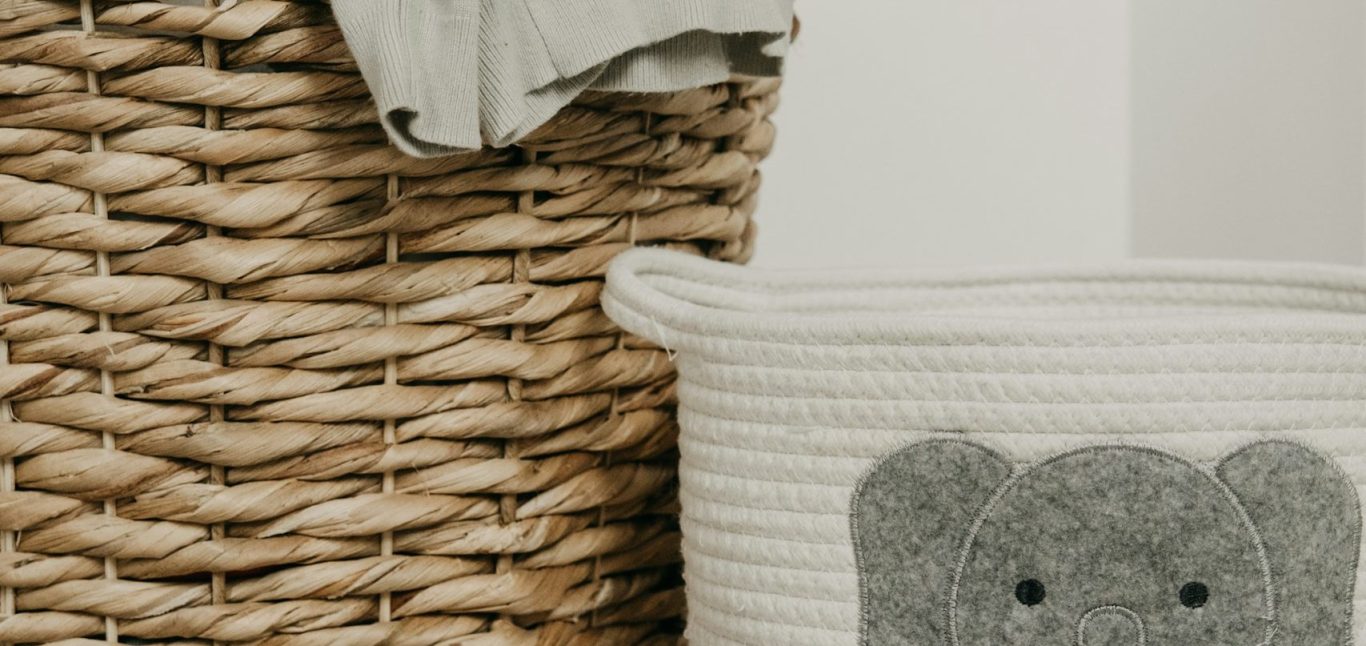
Perhaps the better solution is a bigger, less beautiful basket.
Maybe it doesn't match the cushions.
Maybe it isn't Instagram-worthy.
But it fits everything you need it to fit, and it works.
That's a system.
Function first, beauty second?
I'm not saying your storage shouldn't be beautiful. If you can find something that looks fantastic and functions perfectly, then brilliant.
My work here is done!
But when you're choosing storage, it's worth asking yourself:
What wins in my home — aesthetics or functionality?
And can I find a balance between the two?
Because sometimes the prettiest storage isn't the most useful.
Sometimes the thing that looks slightly less exciting is exactly what your home needs.
So, what actually is a home organising system?
It's simply a way of deciding:
Where does this live?
How do I put it away?
How do I find it again?
That's really it.
A system doesn't need to be complicated.
It doesn't need matching baskets.
It doesn't need expensive storage.
It doesn't need to look like a photograph from a home interiors magazine.
It just needs to make your life easier.
Because ultimately, that's what good home organisation should do.
Your home doesn't exist to be perfectly tidy.
It exists for you to live in.
And when your home is organised in a way that makes everyday life simpler, you get something incredibly valuable back:
brain space.
Less time searching.
Less time deciding where things go.
Less money spent replacing things you already own.
Less frustration when the house gets messy.
And more time and energy to spend on the things you actually enjoy.
That's what a good system is for.
Ruth, October 2026

The House After Summer
This summer has felt a little unusual.
We've been away quite a lot, which has meant the usual summer holiday rhythm has been rather different. When we have been at home, the weather hasn't exactly encouraged us to throw open the doors and spend the day outside as it's mostly been too hot! Instead of windows wide open and sunshine streaming through the house, we've had blinds and curtains closed, fans going and everyone trying to keep cool.(I'm not normally a huge fan of those noisy plastic fans that seem to appear from nowhere every summer, but when it's 35°C, needs must!)
All of those little changes have made me realise just how much the way we use our homes changes throughout the year.
Summer has left its mark
With four of us in the house, including two teenagers, there's always going to be stuff, but summer seems to create a particular kind of stuff.
There have been camping things coming out and going away again. Suitcases appearing, disappearing and then reappearing. Constant piles of washing. There's been dried grass being walked through the house whenever anyone has ventured outside, an endless selection of shoes and sandals, and things being moved away from direct sunlight to stop them fading. Even my poor houseplants have struggled with the heat so i've been picking up dead leaves everywhere.
Normally, I love having the doors and windows open and letting the sunshine into the house, but this year, there have been days when keeping the house cool has meant doing the complete opposite. Our homes are there to support our lives. Sometimes that means accepting a bit of chaos.
The endless summer laundry
I'm not sure there is anything quite like the amount of laundry generated by a family of four in summer.We've been lucky that the good weather has meant we've been able to get through it quickly (and nothing beats the smell of line dried clothes!), but even when everything is washed and dried, there always seems to be another pile waiting to be folded, put away or ironed - clothes seem to multiply.
My daughter, in particular, loves clothes and spends quite a lot of time in charity shops. She's not spending a fortune, and I love that she's buying second-hand, but the result is still the same:
there are a LOT of clothes.
And eventually, the wardrobes reach the point where they simply can't accommodate any more!
Summer is actually a brilliant time to sort clothes
One thing I've been doing this summer is a proper clothing reset. We've completely emptied the wardrobes and laundry baskets, washed and dried everything, and then been quite strict about what actually went back in. It's amazing how much easier it is to make decisions when you're looking at everything all at once.
Things that no longer fit, things nobody wears, things that have seen better days, things that seemed like a good idea when they were bought but somehow never get worn.
I've also been looking at how we're storing everything, because decluttering isn't always about getting rid of things - sometimes it's about making the things you have easier to see, easier to access and easier to put away.
The September school uniform reset
This is also the time of year when school uniform starts appearing on the shopping list. Before buying new clothes, I always think it's worth checking what you've already got.
- What still fits?
- What's in good condition?
- What can be handed down?
- What needs replacing?
Doing this before heading out to buy everything new can save money, reduce waste and prevent the wardrobe from becoming even more crowded, and it's also a good opportunity to create a little breathing space. If you're putting new clothes into an already overflowing wardrobe, you're not really solving the problem, you're just making it bigger, and it's not just the wardrobes.
Despite the chaos of summer, I have actually managed to get a few things done around the house.
When the weather cooled down, I finally tackled a corner of the garden that had been waiting for attention. It's now a lovely shady spot to sit, which feels like a small luxury. We've also reorganised the storage underneath our bed, which has made a surprisingly big difference, and I've done a little redecorating in the bathroom.
None of these were huge projects, but they're the sorts of small changes that make your home feel better, and I think that's something we sometimes forget when we talk about organising.
It doesn't have to mean a complete transformation.
Sometimes it's just making one awkward corner work better or become somewhere you enjoy looking at again.
As we start heading towards September, I'm feeling that familiar urge to get things back under control and lookig forward to getting back into a routine, and there will, eventually, be fewer suitcases lurking around.
But I'm trying not to think of it as a huge 'back to school declutter', instead, I'm looking at the things that have changed over the summer and asking:
What does our home need now?
Maybe it's a clearer hallway.
Maybe it's a wardrobe that isn't bursting at the seams.
Maybe it's somewhere better to store the camping equipment.
Maybe it's simply putting away the fans and opening the curtains again.
Or maybe there's a room that has gradually become a dumping ground and needs some attention.
Your home doesn't need to look perfect, it doesn't even need to be particularly minimalist. It just needs to work for the life you're living, and sometimes, after a busy summer, that means giving it a little bit of attention before the next season begins.
What about your home?
If your house feels a little more chaotic than usual after the summer holidays, you're certainly not alone.
Start small. Choose one area that's irritating you and make it better.
One wardrobe, one cupboard, one corner. One pile of things that has been waiting for you.
You don't have to do everything at once, and if you're completely overwhelmed and don't know where to start, that's exactly what I can help with.
I offer friendly, non-judgemental home organising, decluttering and styling sessions, working alongside you to make your home work better for your real life.
No judgement. No pressure to get rid of things you love. No expectation that you should become a minimalist.
Just practical help to create a home that feels easier to live in, because your home doesn't always need a makeover, it just needs a little reset after life has happened.
Ruth, August 2026
Why Your Home Feels Harder to Manage in Summer
(And Why That's Completely Normal)
We've just got back from holiday and there seems to be stuff everywhere.
As I'm writing this, I can see a pile of holiday washing that's come off the line but hasn't quite made it upstairs yet. The suitcases are still sitting half unpacked, the fridge is empty, and the food shopping needs doing. It feels like we've gone from feeling completely relaxed on holiday to being thrown straight back into the reality of home life.
The recent heatwave certainly hasn't helped either. Everything feels harder when it's hot. Even the simplest jobs can feel like you're swimming through treacle. So, if it makes you feel any better, even as a professional organiser, I don't come home to a perfectly tidy, organised house at this time of year.
And with the summer holidays just around the corner, I always have that little feeling of anticipation... and, if I'm honest, a tiny bit of dread about the constant change that comes with them.
Summer changes the way we live
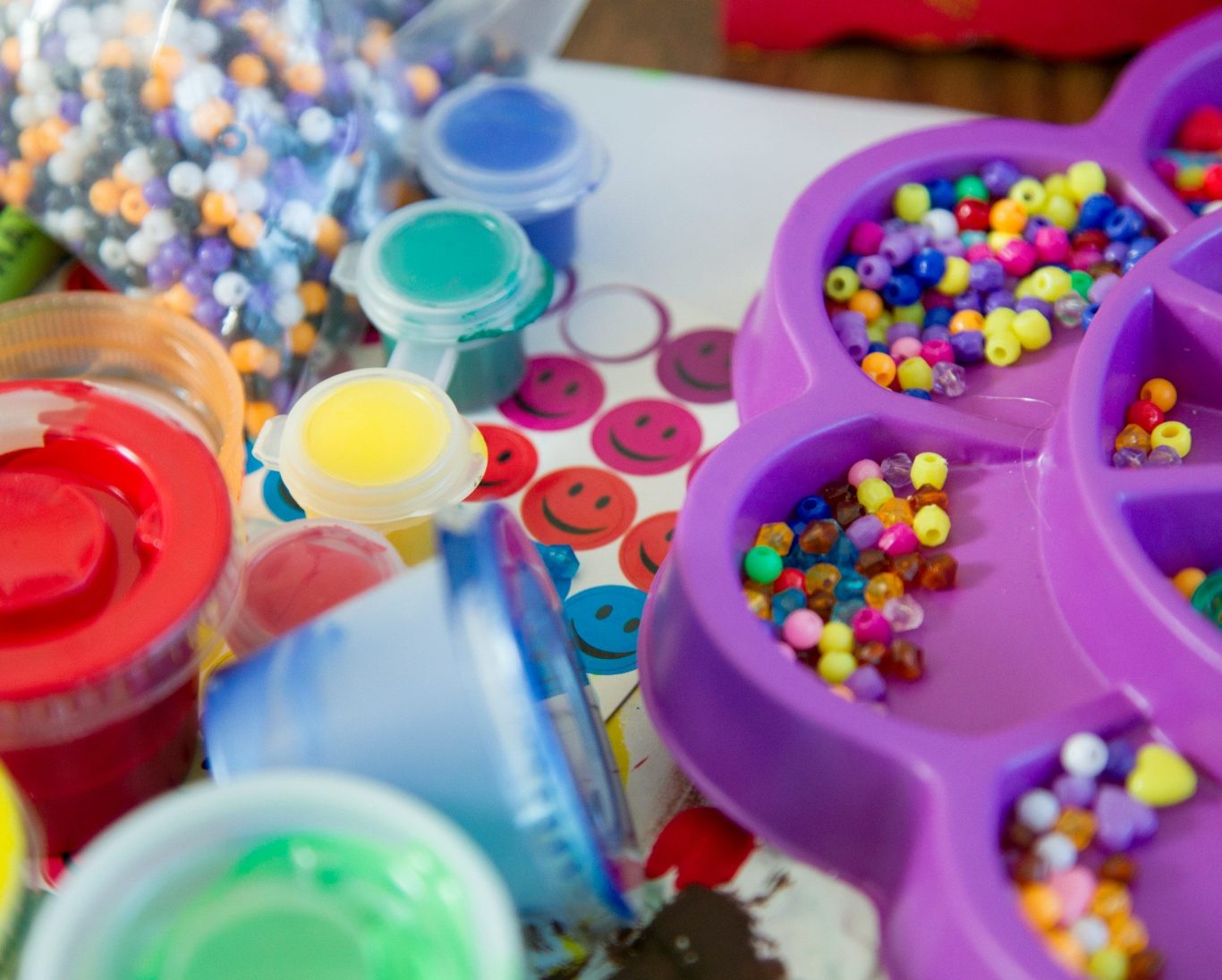
The life we had in March isn't the same life we have in July. If you have kids, suddenly there are more people at home. The garden becomes another living room. There are paddling pools, handheld fans, sun cream, outdoor toys, sandals by the back door, books, half-finished craft projects and games spread across the table.
Whether there are 2 people in the house or six, everyone is trying to enjoy themselves, spend time together and make the most of the summer. It's lovely, but it can also feel overwhelming so rather than fighting against it, I think it's much kinder to accept that your home needs to work differently for a few months.
Create systems that work for summer
Instead of expecting everything to disappear neatly at the end of each day, think about how you can reduce your mental load.
Maybe that's a large basket in the corner where toys can be gathered in the evening.
Maybe it's a plastic storage box where all the craft supplies live, so they come out together and go back together - projects don't have to be packed away completely. They just need one obvious place to belong.
If you have younger children, a toy rotation can also make a huge difference. Rather than having every toy they own available all at once, swap them over every week or two. It reduces visual clutter and often makes old favourites feel exciting again.
And if someone's halfway through a jigsaw or building an elaborate Lego creation, try finding a flat surface where it can stay until it's finished. Not everything has to be tidied away every evening.
Your hobbies deserve space too
If you don't have children at home, summer often brings a different kind of clutter. You might spend more time gardening, sewing, painting, crafting or tackling DIY projects. One thing I hear from clients time and time again is:
"I'll just leave it in the corner because it looks messy." but actually, your hobbies deserve space too.
Being creative is good for your wellbeing. If packing everything away means you never get it back out again, perhaps what you really need is a clearly defined area where that hobby belongs.
It doesn't have to be picture-perfect, it just needs to work for you.
Sometimes accepting a little creative mess is worth it if the result is that you're making time for yourself and doing something you love.
Give yourself permission
Over the next few weeks, I'd encourage you to give yourself a bit of grace.
If the washing isn't put away straight away...
If the toys are everywhere...
If dinner is a picnic, freezer food or a plate of mini Scotch eggs...
That's okay.
You're living your life. You're enjoying your time. You're trying to stay cool.
Your home should support that, not make you feel guilty, so give yourself a break. Grab a handheld fan, enjoy the ice lollies and don't put pressure on yourself to keep everything looking exactly as it did in the spring.
And if, at any point, you decide you'd like an extra pair of hands, I'd love to help.
Whether it's organising a playroom before the holidays, creating a craft space that inspires you to use it, or simply helping your home work better for the season, we can create practical systems that make everyday life feel that little bit easier.
Because an organised home isn't about perfection. It's about making space for the life you're actually living.
Ruth
July 2026
Just in case...
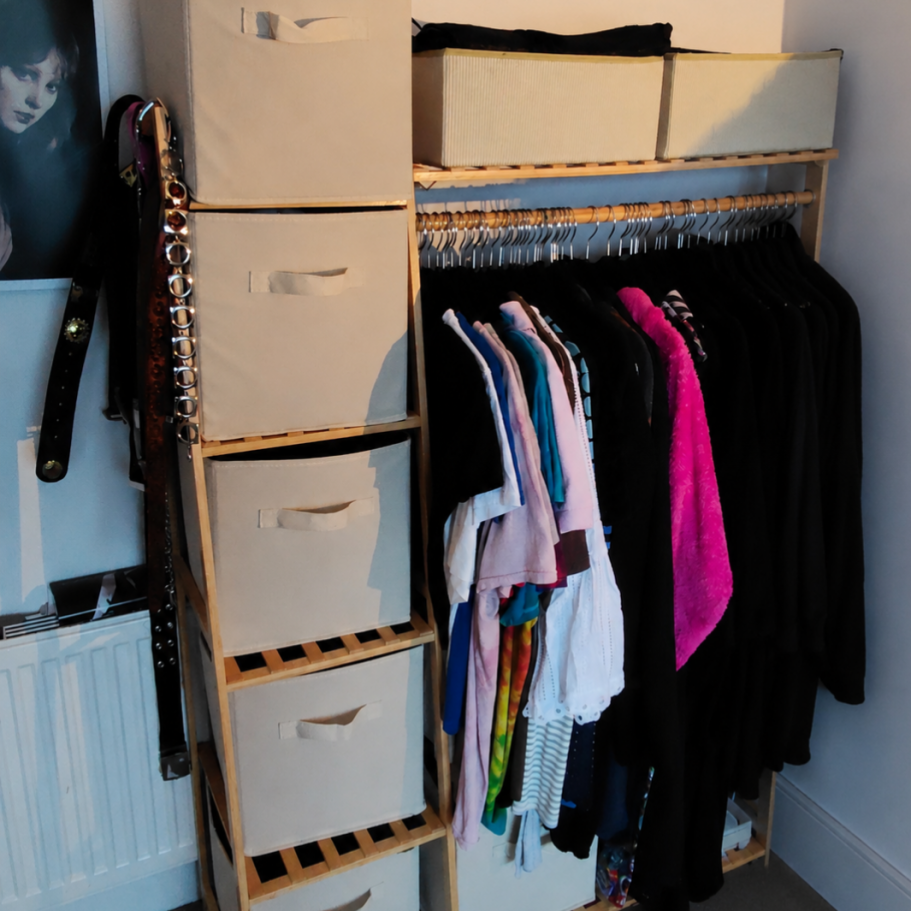
We've reached that time of year when thoughts start turning to holidays and we begin thinking about what we'll pack, what the weather might be like, and whether last year's summer clothes still fit, suit us, or even still exist somewhere at the back of the wardrobe.
As I was sorting through my own clothes recently, it got me thinking about all the things we keep 'just in case'.
Maybe it's a dress you're keeping for the holiday you might take one day. Perhaps it's a uniform from a previous job that you've never quite known what to do with. Maybe it's maternity clothes, even though you know your family is complete. Or sports equipment from a hobby you haven't done in years.
We all have things like this - items that represent a possible future, a previous chapter of our lives, or a version of ourselves that no longer quite fits.But the question is, when do we accept that the moment we're keeping them for has already passed, or may never come, and even if it does come again, would we really need that exact item?
Sometimes we hold on to things because we're worried we'll need them one day. But in reality, many things can be borrowed, replaced, hired, or bought second-hand if the need genuinely arises. Meanwhile, they're taking up valuable space in our homes, wardrobes and cupboards.
Your home doesn't need to be storage for every possible future scenario, nor does it need to hold on to every chapter of your past. As the seasons change, I think it's a useful opportunity to take stock of what we actually use and enjoy, rather than what we're keeping out of habit.
Keeping the Memory, Not Necessarily the Thing
One area where this often comes up is special occasion clothing. Perhaps you have an outfit you wore to a wedding that brings back lovely memories every time you see it - a bridesmaid dress, a suit; or an outfit you wore for a particularly special celebration. The memories are important, but do you need to keep the entire outfit?
Sometimes keeping one small piece is enough. A handbag, a tie, a piece of jewellery, a hair accessory, or even a photograph tucked away with the invitation can hold just as much meaning as an outfit hanging unworn in the wardrobe for years - you're not getting rid of the memory, you're simply finding a different way to keep it.
Looking Back at Winter
This time of year is also perfect for reviewing your winter wardrobe while it's still fresh in your mind.
What did you wear all the time, what made you feel comfortable and confident, And what sat untouched all winter long?
Perhaps you've outgrown something. Maybe it's no longer your style. Perhaps it's damaged and, if you're honest, you're never going to get around to repairing it. If that's the case, why wait until next autumn to discover exactly the same thing?
Now is a great time to donate, recycle, repair or dispose of those items so they aren't taking up space for another six months. The same applies as you start reaching for your summer clothes. Do they still fit? Do they still suit you? Do they fit your current lifestyle?
Sometimes our lives change and our belongings simply don't catch up.
Maybe you were really into cycling a year or two ago, but now you don't have a bike and haven't ridden in ages. If that's no longer part of your life, it's perfectly OK to let the helmet, gloves, lock and high-vis vest go to someone who will use them.
Maybe you've changed jobs, moved house, retired, become a parent, started a new relationship, or simply discovered that your tastes have changed. That's normal and our homes should evolve with us.
As you're sorting through wardrobes, cupboards and drawers this summer, ask yourself what am I keeping this for?
If the answer is 'just in case', it might be worth digging a little deeper - sometimes the answer will be a good one, and you'll keep it. But sometimes you'll realise you're holding on to a version of the past, or preparing for a future event that may never happen, and that's often the moment when it's easiest to let something go.
Ruth
June 2026
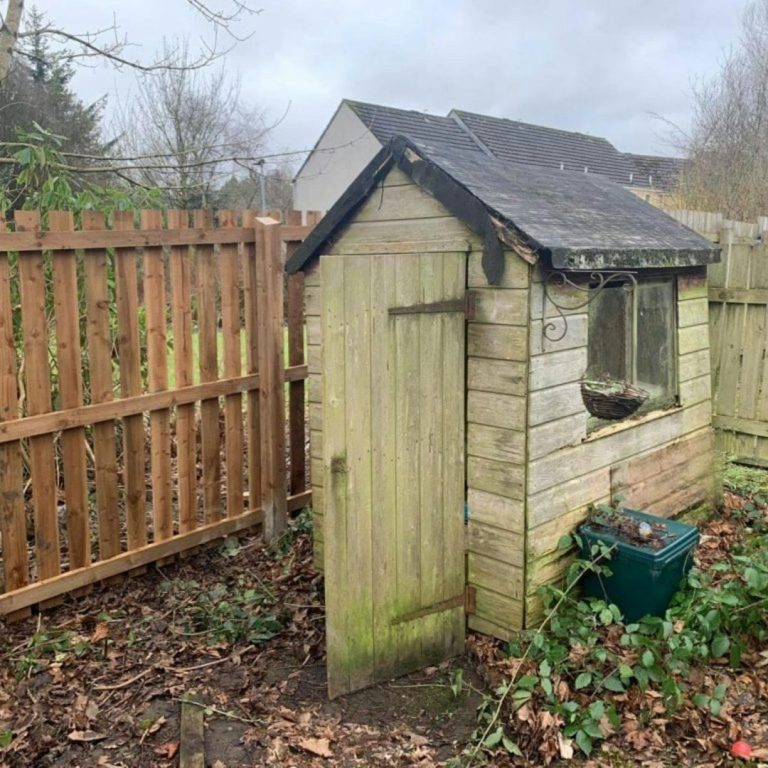
What's hiding in your shed?
Now that we’re heading into May, with the bank holidays and (hopefully) a bit of sunshine, it’s that time of year when we start turning our attention outside.
You might be thinking about the garden, tidying the patio, or what you’d like to plant this year. And somewhere along the way, your shed, garage, or outdoor storage space probably comes into view too.
I always think of these spaces as the last stop before things actually leave the house.
It’s where things go when we’re not quite ready to decide.
“I’m not sure if I need this… I’ll put it in the shed.”
“I might still use that… it can go in the garage.”
And then it sits there. Sometimes for years.
I think most people would find something like that if they had a proper look. An old chair from a relative, a tool from a previous house, something that came from a neighbour years ago; and it just… stayed.
Often not being used, maybe a bit rusty or mouldy, but not quite dealt with either.
Which is a shame really, because these spaces are actually incredibly useful. They don’t need to look pretty or styled - they’re there to be practical and to give you that bit of breathing room in the house.
But so often they end up packed floor to ceiling with things we don’t need, or don’t even realise are in there.
So this month, I wanted to gently focus on how we can make those spaces work better for you.
Not by emptying everything out onto the driveway (because let’s be honest, that’s overwhelming and not how most people want to spend a bank holiday weekend), but by starting small.
It might be as simple as tackling one box.
Maybe there’s a container of old magazines you already know you don’t want — you just haven’t got round to recycling them. That’s an easy win.
Or a toolbox that’s become a bit of a dumping ground. Ours definitely has. Taking the time to empty it out, get rid of the rusty nails, the random fixings from long-gone flatpack furniture, the bits you’ve been keeping “just in case”… it makes a real difference.
If you're a gardener, it’s a good moment to look at your tools too. Are they still usable? Do they just need a clean and a bit of oil? Or are they past it? Getting them back into good working order means you’ll actually enjoy using them again.
And then there’s how the space itself works.
If you’re storing things that need to stay dry, it’s worth moving them into sealed containers rather than old cardboard boxes that can get damp or squashed.
Simple things like hooks can make a big difference too. Hanging tools up where you can see them means you’re far more likely to use them — and put them back in the same place afterwards.
We’ve got a large hook in our shed that holds a sledge. It only comes out once or twice a year if we’re lucky, but it was mine as a child, so I want to keep it. It lives quietly on its hook, out of the way, but easy to find when we need it.
And a small side note — if you’re not a fan of spiders and creepy crawlies, having fewer piles, boxes and hidden corners really does help. Fewer places for them to settle!
Once you’ve made even a small shift in these spaces, it changes how they feel. They become easier to use, easier to navigate, and actually support you rather than frustrate you.
And it means you can get back to the nicer part of this time of year - being outside, enjoying your garden, and having what you need to hand when you need it.
You might even come across a few things you no longer use that could be sold on, and turned into something you’d enjoy more (or at the very least, something nice for the BBQ).
If this is a space you’ve been avoiding, you’re not alone. And if you’d like some help tackling it, I’m always here - no pressure, no judgement, just a calm, practical approach.
Ruth
May 2026
April at Home: Embracing the Mess
(and finding what works for you)
When “Spring Cleaning” Feels Like Too Much
This time of year is often associated with spring cleaning - a fresh start, a big reset. But in reality, that idea can feel overwhelming.
It can create a quiet pressure that says:
“I should be doing more.”
“I should be sorting everything out.”
“I’m falling behind.”
And the truth is that simply isn’t the case. There is no one “right” way to reset your home. If you love a big clear-out, that’s wonderful. If you don’t have the time, energy, or inclination this year, that’s equally valid. As always, the goal is to find a pace that works for you and your life, not to force yourself into someone else’s idea of what your home should look like.
A Simple Shift: Creating a ‘Drop Zone’
If you’ve got a busier house over the Easter holidays, one small change can make a big difference. Instead of trying to keep
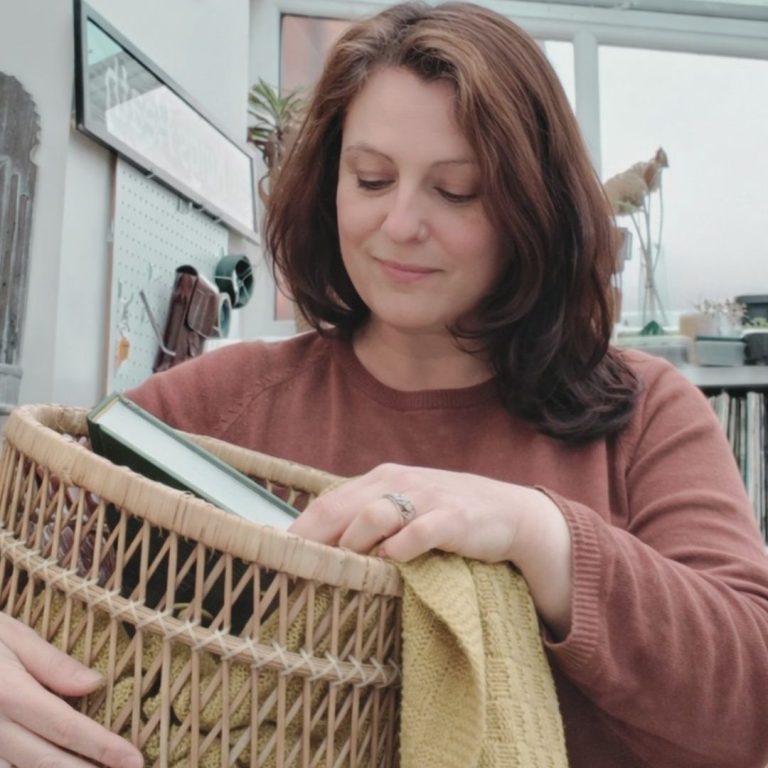
everything perfectly organised, try setting up a drop zone - a large basket, box or container in your main living space.
At the end of the day:
- Gather up the toys, crafts, games, and general “bits”
- Place everything into the basket
- Tuck it into a corner of the room
You’re not organising everything, you’re simply containing it.
What this does is:
Visually reset the space so you can relax in the evening, gives everyone a clear answer to “Where’s my…?” (“It’s in the basket”), keeps everything in one place, ready for when you do have time to sort, and when that time comes, the basket becomes part of the system:
- Take it room to room
- Return items to where they belong
- Let the basket travel with you until everything is back in place
It’s simple, flexible, and doesn’t require much energy, which is exactly what’s needed during a disrupted routine.
Don’t Underestimate Small Resets
Not every reset has to be a big one.
At this time of year, something as simple as:
Opening the windows, letting in fresh air, bringing in light.
can completely shift how your home feels and sometimes, that’s enough.
Clutter vs. Temporary Mess
One of the most important things to remember during this season is this - there is a difference between clutter and temporary mess. Clutter is the ongoing, long-term build-up that can feel heavy and overwhelming, whereas temporary mess is the natural by-product of a life that’s currently a bit out of routine. During the Easter holidays, most of what you’re seeing is likely the latter.
And temporary mess has a home, will be tidied, will settle again once routines return. So try not to let it weigh on you more than it needs to.
Let Your Home Work With Your Life (Not Against It)
If you do feel like having a clear-out, April can be a great time for it.
But equally, it’s okay if this period is about:
Slower days
Flexible routines
Making space to enjoy time together
The key is not to let your home become a source of pressure during a time that could also hold rest.
Sometimes the most helpful thing you can do is put a simple system in place, accept that things feel a bit different and allow that to be enough.
A Gentle Reminder
Your home doesn’t need to be perfect to be working well.
Especially not in a season of change.
If you’d like support creating systems that work for your home and your routine - whether that’s a small reset or something more in-depth, I offer calm, practical organising sessions tailored to you.
You can get in touch to book a free consultation or a 3-hour starter session.
This time of year has a funny way of shifting everything all at once. The Easter holidays arrive, routines change, the clocks go forward, and suddenly the rhythm of everyday life feels different. For many of us, that means:
- Children home from school for a couple of weeks
- Bank holidays, celebrations and family visits
- Half-finished jobs around the house
- A change in energy, motivation, and pace
And often, alongside all of that, comes a bit more mess and a bit less structure.
Start Small: A Gentle Approach to Spring Decluttering
It’s March, and it finally feels like spring has arrived.
The days are getting longer. The weather is improving. The sun is shining and we’re all getting that much-needed vitamin D boost. Everything feels just a little bit easier.
And with that shift always comes the same urge: to declutter, to reset, to spring clean.
There’s something about this time of year that makes you want to throw open the windows, strip everything back, and start again. The classic spring clean, and the temptation to Do It All...
It’s so tempting to decide you’re going to tackle the whole house in one go. To pull everything out of cupboards, empty drawers, clear shelves, and “sort it properly”.
But that approach is exhausting. And it’s almost impossible not to feel completely overwhelmed when you do it.
You know that moment - you’re surrounded by piles of things, halfway through, energy flagging, wondering why on earth you started. And sometimes you just decide to get up and walk away, leaving the house in a worse state than when you began. I've definitely been there!
Instead, try this: pick one small space.
A bookcase. One cupboard. A chaotic shelf.
That basket that’s quietly overflowing.
A corner of a room that’s become a bit cluttered.
Small spaces are powerful.
They’re manageable. You can finish them in half an hour or an hour. You get that quick hit of satisfaction from completing something. It’s an easy win.
And that sense of completion often gives you the motivation to keep going - either to tackle another small area, or to do a little more in the same room.
But if you don’t? That’s fine too.
You’ve still finished something.
You’ve got a bag ready for the charity shop.
A bag for the bin.
And one calm, tidy space to enjoy.
Look for the Friction Spots
Another helpful approach is to notice the friction points in your home, the areas that quietly annoy you every day.
The places where you think, 'I really need to sort that.'
For me, it’s the hallway. The dump zone. The place where bags land, shoes pile up, post collects, and everything seems to gather.
Those friction spots are brilliant places to start in March. Because when you ease friction in your space, daily life feels smoother.
And that’s what spring is really about - creating a little more lightness, a little more ease.
For me, Spring Cleaning isn’t about a dramatic, whole-house overhaul.
It’s about small things.
Starting small.
Making it achievable.
Letting those easy wins build momentum.
Spring doesn’t need to be overwhelming.
It can just be one shelf. One basket. One corner.
And that’s enough to earn yourself a cuppa and a sense of satisfaction!
Small Steps for a Calmer February
February can be a hard month. It’s dark. It’s cold. Motivation can feel very thin on the ground. All you really want to do is snuggle under the duvet or sneak in another nap - and honestly, that’s completely understandable.
When we spend so much time indoors at this time of year, it can feel particularly tough to look around and notice the piles of stuff: clothes, books, toys, paperwork… plus the never-ending cycle of cleaning, laundry, and dishwashers. It can feel overwhelming before you’ve even started.
But you don’t have to do big, dramatic declutters. You don’t need to overhaul your entire home or aim for perfection. Instead, it can be enough to set up small, regular habits - tiny jobs that take just five minutes and gently take the pressure off. Those small moments add up. They reduce the visual noise, ease the overwhelm, and make your home feel more manageable.
And remember, a house doesn’t have to be perfect. It’s not a show home. You’re not sending photos of the corner of your bedroom to an interiors magazine. What really matters is that your home feels calm and restful for you and your family.
That might be having one surface you regularly clear so you always have a calm, clutter-free space. Or it might be as simple as a basket in the corner of the living room, where at the end of a busy day you can scoop everything up and put it away. It’s not pristine - but it clears the visual clutter and gives you space to relax. And that’s exactly what we need at this time of year. Rest. Relax. Hibernate. And gently get ready for spring.
Quick Wins for February
1.
Declutter one surface that's driving you mad
Maybe it's the hallway sideboard, the kitchen worktop or the coffee table. Take 10 minutes to empty everything from it, clean it, and only put back what needs to be there. Dispose of any rubbish like old receipts or empty packets, take any washing up to the kitchen and put things back in their designated spaces.
2.
Tidy one area that is used daily
The collection of shoes in the hallway, the bags that get dumped in the corner after work or school, or the pile of paperwork and post sitting on the kitchen table. It doesn't need to look elegant, but putting everything on a hook or into a container helps remove some of the visual stress.
3.
5 minute living room reset
Start by removing any washing up. Pick up any rubbish and dispose/recycle. Empty the waste bin. Pick up any shoes or clothes and put them away. Pick up any throws or cushions and put them back on the sofas. Collect up any remotes or gaming stuff and put them in a basket or drawer. Straighten the rug, open the curtains or blinds, turn any lamps or lights off (unless it's night time, in which case do the opposite!)
It may not be perfect, but it will make it easier to relax and do any bigger cleaning or tidying next time!